 إقرأ باللغة العربية:
Ahmad Ismail never imagined that his routine trip to help his brother could end his life in an instant.
While Ismail and his brother’s employees were laying cables where a private generator owner operates, bullets flew over their head, piercing the pattern of corruption and thuggery that state institutions and security agencies have failed to stop.
Three months before Ismail was killed, his brother Hussein had also been shot in the leg by a group of men belonging to the inner circle of generator owner and party cadre Abbas Hashem, who boasts on his Facebook account about his ties with a considerable number of politicians, security officials, and party figures.
Ismail lost his life eight months after his wedding, and his brother was left with a permanent disability in his leg, all because of disputes over “ishtirak (subscription)” generators in the Lebanese capital, Beirut, and the division of neighborhoods according to a system of intimidation and protection rackets.
Ismail worked in an unrelated field, yet his death is a stark example of the chaos surrounding Lebanon’s private electricity industry, many of whose perpetrators have remained untouchable, allowing them to act with little to no accountability.
When the Lebanese state failed to fulfill its duties to provide electricity to its citizens, private generators imposed themselves as an exclusive alternative rather than a choice. This de facto sector includes private generators for bureaucratic, residential, and governmental institutions, buildings, hospitals, and companies, the machinery owned by individuals who supply electricity to households in exchange for a monthly fee.
In recent years, ishtirak has increasingly been associated with recurring stories of exploiting and monopolizing citizens, extorting them, inflating bills, and failing to adhere to official pricing. Yet these blatant practices represent only part of a more dangerous picture in which people sometimes lose their lives without the perpetrators being held accountable.
The ishtirak network has created a number of groups openly operating above the law, capable of imposing protection fees, carrying out assaults, and—sometimes—killing rival generator owners, all while surrounding themselves with political and party cover. Within the shadows and hidden networks of this sector, there are also generators and wiring networks that experts have expressed are ticking time bombs for public safety.
Raseef22 presents a number of tragic incidents when those affiliated with the ishtirak network were killed, thereby exposing the corruption, disregard for safety, and displays of force that plague the overlooked and underregulated industry.
When the Lebanese state failed to fulfill its duties to provide electricity to its citizens, private generators imposed themselves as an exclusive alternative rather than a choice.
Survival of the fittest
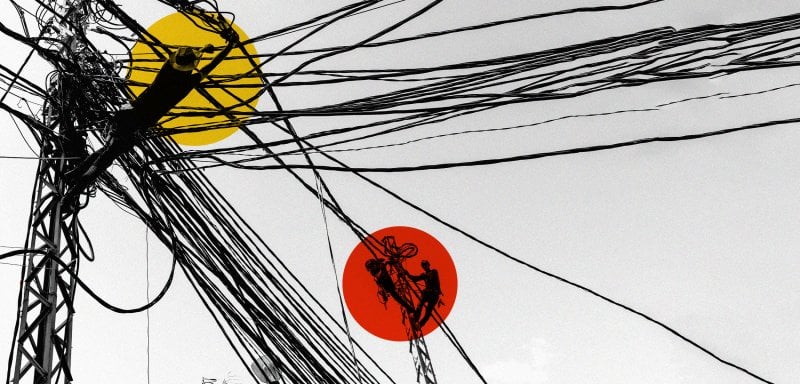
Walking through Beirut by foot, one notices electrical boxes and cables strung along state-owned electrical poles.
Most neighborhoods are divided among generator owners in a manner resembling the partitioning of buildings and districts, such that—according to the norms of those in the trade—a generator owner is not allowed to operate within the territory of another, even if the customer opens up a dispute with their neighborhood’s generator owner.
We met with Ahmad’s brother, Hussein, one of Beirut’s generator owners. He shared that his leg was shot in April 2024 as a result of a dispute with Abbas Hashem, fellow generator owner, and his son, over ishtirak subscriptions and cables.
Despite the graphic video corroborating Hussein’s story, the named perpetrators were neither arrested nor held accountable by the state in any way.
“The Internal Security Forces (ISF) didn’t ask about me or what had happened,” Hussein told Raseef22. He accused an investigating officer of “burying the case.” Instead, a party official urged him to drop the complaint against the shooters.
“We dropped the lawsuit, and then my brother Ahmad died,” he added. “If we had continued, we wouldn’t have ended up here.”
Hussein believes that if he hadn’t yielded to the pressure from his peers and continued the legal proceedings against the man who shot him, then his brother would likely be alive today.
Raseef22’s interview with Hussein, the victim’s brother
Hussein and Ahmad are just one example of the power wielded by ishtirak mafias benefitting from political networks with influential figures and, ergo, security enforcement.
This layered protection is illustrated clearly by the fact that, after Ahmad’s “execution,” as Hussein put it, in June 2024, none of the group’s members — nine of whom have arrest warrants issued against them — has been detained.
“Hashem has the right to operate in whichever neighborhood he pleases, while the rest of the generator owners are forbidden from working in his territories, unless it is with his permission and under his control,” said Hussein, who also claimed that Hashem had previously tried to impose protection fees on generator owners, demanding either $10 to $15 per month from them for every subscriber, or hand over 7,000 liters of diesel in exchange for allowing them to operate safely.
“It’s common knowledge who protects him and who backs him. al-Hajj (a party and political official he did not name), may God grant him a long life. And he has relatives who are influential in the parties. If not, why hasn’t he been arrested?” asked Hussein.
In recent years, ishtirak has increasingly been associated with recurring stories of exploiting and monopolizing citizens, extorting them, inflating bills, and failing to adhere to official pricing. Yet these blatant practices represent only part of a more dangerous picture in which people sometimes lose their lives without the perpetrators being held accountable
Raseef22 reviewed the judicial record of Ahmad’s murder, which showed that, so far, the legal procedures, investigations, and conclusions all intersect around disputes over generator cabling and the failure to arrest Hashem and eight other suspects and defendants.
The indictment issued by the acting First Investigative Judge in Beirut, Bilal Halawi, reveals that there are nine fugitives, including Hashem and his son Bilal, who are subject to prosecution and trial in absentia, and who were charged in the indictment, in addition to six detainees and two individuals released on bail.
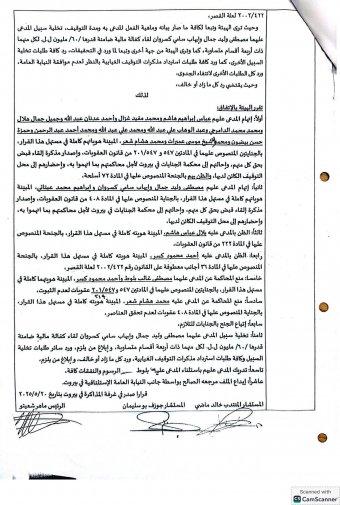
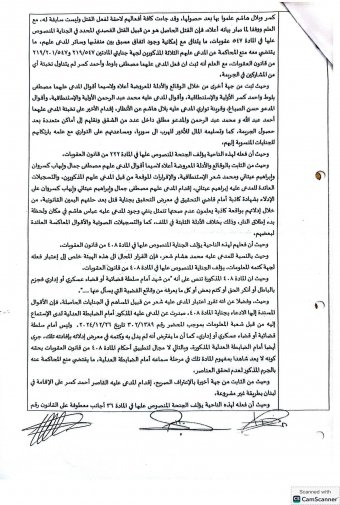
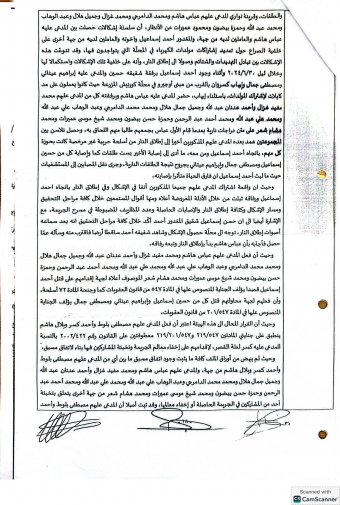
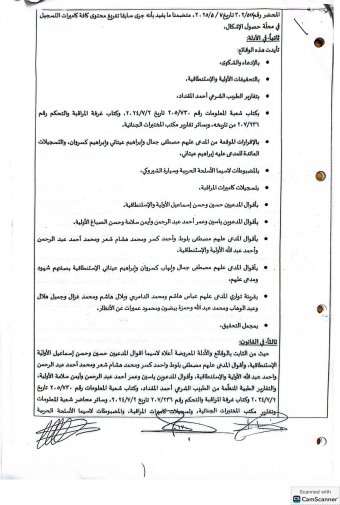
Official documents issued by the indictment chamber
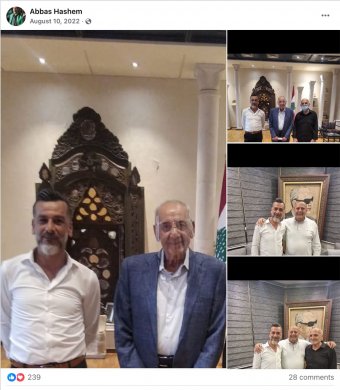
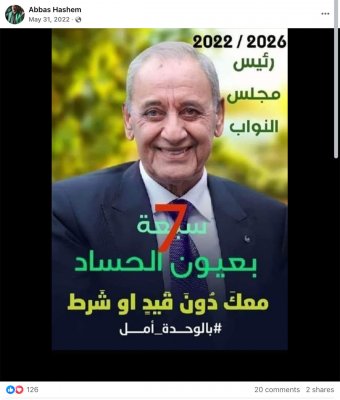
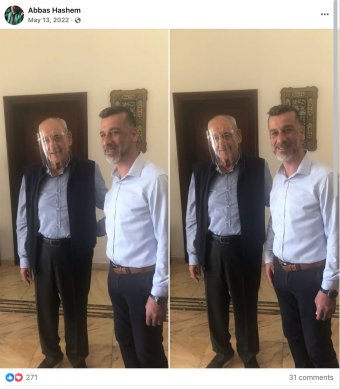
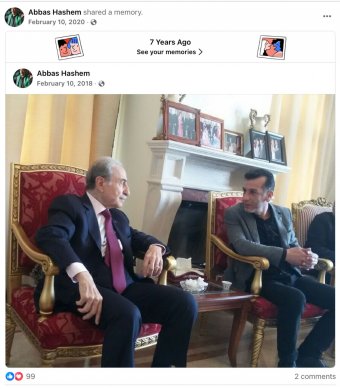
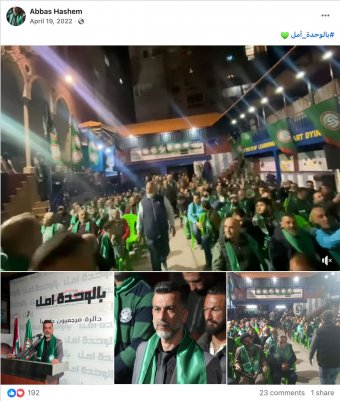
On his Facebook account, Hashem, who is also the former deputy mayor of the Rab Thalathin village in southern Lebanon, boasts of his political affiliation and posts photos of his meetings with party and political figures, including Lebanese presidents and ministers.
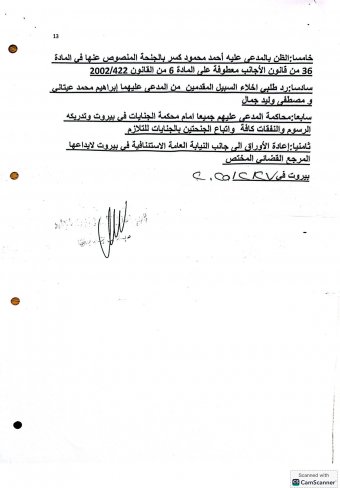
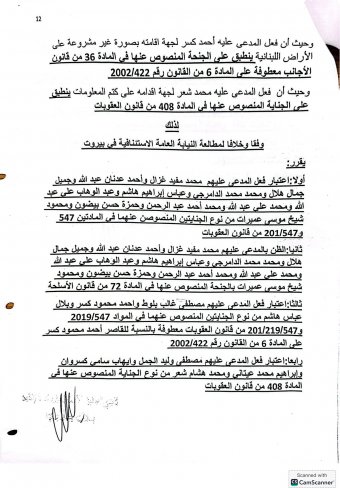
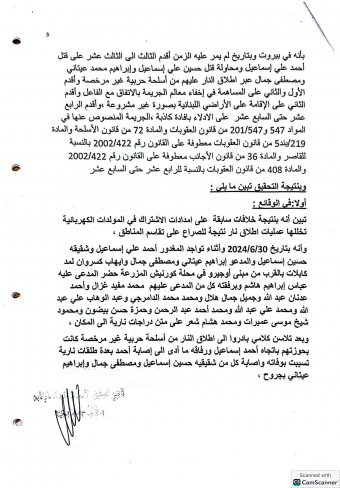
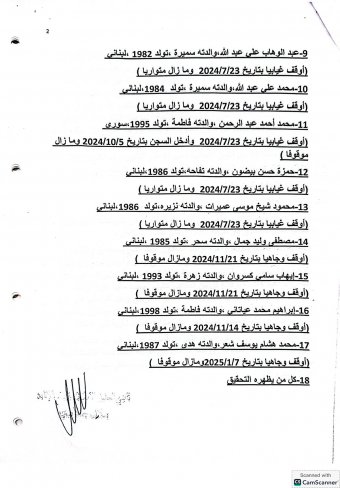
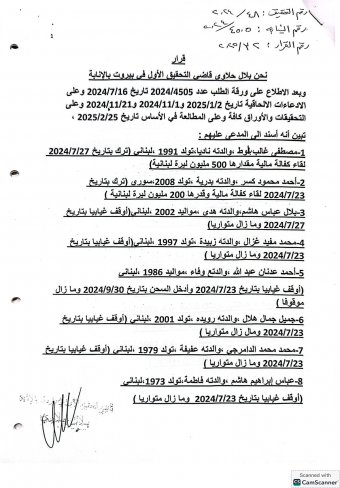
Official documents of decision issued by acting First Investigative Judge in Beirut, Bilal Halawi
While party affiliation alone cannot be considered sufficient grounds for accusations of collusion, and social media photos do not necessarily mean state protection, Hashem and Bilal’s evasion of justice casts doubts, trust, and faith in political representatives and the personal interests that sustain Hashem’s lucrative operations in the ishtirak trade.
The ticking time bombs in residential neighborhoods
In a small shack belonging to her family in Mina, Tripoli, Lebanon’s second-largest city, we met Manal al-Soussi, a mother who, along with her five deceased children, embodies the absence of accountability and responsibility for the crimes of the ishtirak industry.
In our conversation with al-Soussi, we sensed she was holding onto wavering hope that would see justice for her children. When recounting events of March 2025, when she had left home — the janitor’s room where she lived with her children on the ground floor of a building in Mina — to buy her children’s Eid clothes. When she returned, there was black smoke rising through the building. She was told her five children had died of suffocation.
The case is still in the drawers of the investigation department in Tripoli as the public prosecution waits for the Civil Defense’s expert report on the cause of the fire. The mother of the five children feels that her children’s rights could be lost because they are Syrians, adding that the expert report has already been prepared but has not been added to the investigation.
Raseef22’s interview with the mother of the five victims, Manal al-Soussi
Raseef22 tracked down the findings of the expert’s report, which found that the fire was caused by faulty wiring due to the four ishtirak power sources in the building. The fire resulted from an electrical short circuit in the wires, but the exact cause of fire could not be determined because the burnt wires were replaced immediately after the incident under the pretext of restoring the electricity supply. It should be noted that in such incidents, a crime scene cannot be tampered with until the relevant authorities have completed their inspections.
The expert’s conclusion also mentions that electricity was cut off at the time of the fire, and an internal report from the Kadisha Electricity Company, the state’s electricity company, seen by Raseef22, confirms that state electricity was out in the Mina area.
By following up and inquiring about the status of the case, it’s clear that the report was prepared some time ago and identifies the cause of the fire. Yet the surprising fact is that the case is still being held by the General Directorate of Civil Defense, and that the usual procedures for such cases have not been taken or carried out to incorporate the report into the larger investigation.
A retired expert in the field told Raseef22 that the judicial path requires investigators to send a report number and the ISF to send a telegram to the General Directorate of Civil Defense in order to officially receive the expert’s report — something that has not happened so far, which he finds surprising.
Al-Soussi’s tragedy illustrates the extent of hazard and chaos reaped by ishtirak generators, that flies under the radar of public safety and concern without any prospect of accountability, timely procedure, thereby creating the conditions for such an incident to be repeated, in Tripoli and elsewhere, again and again.
The 9,000 private generators in administrative Beirut account for around 50 percent of the sources of pollution and dangerous pollutants, according to MP Saliba, who also noted that there is now a private generator shared amongst every pair of buildings, reaching into residential balconies and private rooms.
The dangers of generators and random wiring inside buildings
In another fire that broke out in February 2025 in Tripoli, the expert’s report reached a conclusion similar to the fire that killed al-Soussi’s children: an electrical short circuit at the intersection of the wires. This time, the damage affected a kindergarten, and reached a sports club, residential apartments, and other properties.
The site also witnessed tampering after the fire, and the burned wires were replaced under the pretext of restoring the electricity supply, which obstructed the precise determination of the origin of the fire.
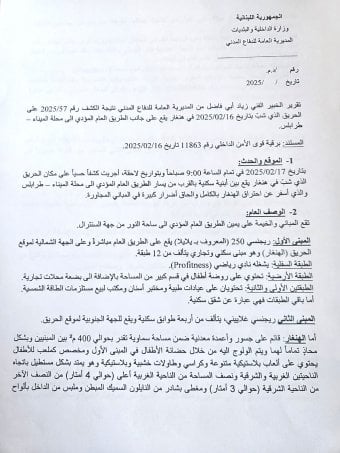
Technical expert’s report on the Tripoli fire
The expert’s report warns against electrical generators near residential buildings, as they pose a danger to residents’ safety, in addition to the dense, interconnected electrical wires that resemble a spider’s web.
The investigation into the February fire was shelved. No one was charged or held responsible on the grounds that responsibility could not be determined.
Meanwhile, in Beirut, an electrical generator sparked a major fire, according to former Interior Minister Bassam Mawlawi. The fire that broke out in Hamra in November 2024 spread to a parking lot, burning some cars and exploding others. Several residents of nearby buildings narrowly escaped death and suffocation as the flames broke out and reached their balcony.
These fires, caused by unregulated generators, faulty wiring, fuel tanks embedded into residential neighborhoods and homes, in the absence of serious accountability from the authorities, raises questions about the role of municipal and governmental oversight in managing and reducing public safety risks.
Once there is knowledge of pollutants and emissions and the harm private generators cause, this constitutes, in law, probable intent, punishable under Article 564 of the Penal Code, which stipulates that anyone who causes a person’s death through negligence, lack of precaution, or failure to observe laws and regulations shall be punished with imprisonment
Killer generators: Immediate danger and ineffective enforcement
There are serious environmental consequences from the presence of generators close to homes, according to a review of complaints received by the Socio-Economic Institute for Development (SEID).
These complaints reveal serious concerns shared by residents about the number of generators surrounding their homes. In the old neighborhoods of Mina, for example, a complaint was filed against two generators located 25 meters from their homes. A similar complaint, shared with Raseef22 by MP Najat Saliba, shows a resident documenting the spread of generators just meters away from the rooms in their home.
Video of a resident’s complaint about generators near his home
These concerns are also supported by a comparative study conducted by the American University of Beirut (AUB). The findings confirm that the number of generators in Beirut increases pollution levels and the risk of cancer and other diseases.
The accumulation of data since 2010 allowed for comparison and led to alarming findings. MP Saliba, an environmental activist and academic specializing in chemistry, told Raseef22 that electricity cuts lasting 17 hours a day could lead to more deaths, according to the latest study published in 2024, which confirmed that cancer risks had risen by 53 percent compared with 2017.
The 9,000 private generators in administrative Beirut account for around 50 percent of the sources of pollution and dangerous pollutants, according to MP Saliba, who also noted that there is now a private generator shared amongst every pair of buildings, reaching into residential balconies and private rooms. She classifies Beirut as a highly polluted city given pollution levels reach more than three times the World Health Organization (WHO) recommended limit.
Raseef22’s interview with MP Najat Saliba
Confronting death: Limited success and new failures
The rise in Beirut’s pollution levels and the increase in carcinogenic substances, according to AUB’s study means, in practical terms, that there is a form of probable intent to kill, according to lawyer Shukri Haddad.
With regards to the legal consequences and classification of the offense, Haddad adds that the responsible party here is both the generator owner and the administrative authority that has the duty to monitor and prevent the offense. Once there is knowledge of pollutants and emissions and the harm they cause, this constitutes, in law, probable intent; that is, knowledge of the outcome without the necessary corresponding action, a crime (probable intent) punishable under Article 564 of the Penal Code. Article 564 stipulates that anyone who causes a person’s death through negligence, lack of precaution, or failure to observe laws and regulations shall be punished with imprisonment from six months to three years.
Article 189 of the Penal Code considers a crime intentional even if the criminal intent arising from the act or inaction exceeds the perpetrator’s purpose, if he foresaw its occurrence and accepted the risk.
The legal ramifications of Haddad’s accusation suggest that Beirut’s environmental public prosecutor, Judge Nadim Zouein, must act according to the Ministry of Environment Circular No. 4/1. The circular requires generator owners to install filters to treat air pollutants according to the necessary specifications, in addition to sound mufflers. It also stipulates public safety conditions that must be met when handling oils and grease during generator maintenance, safely storing petroleum products, and the provision of fire extinguishers to deal with any emergency.
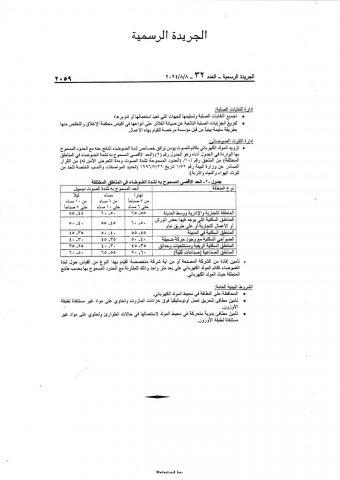
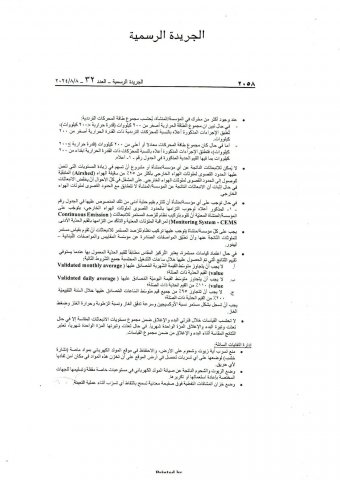
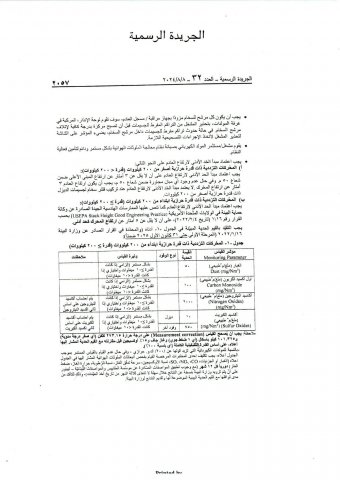
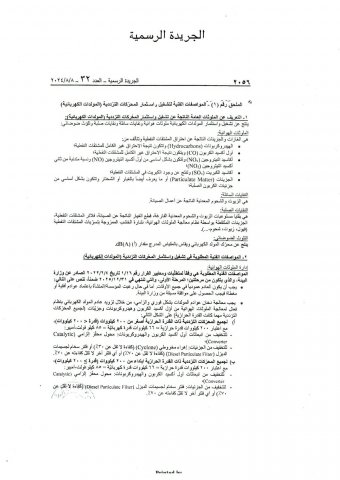
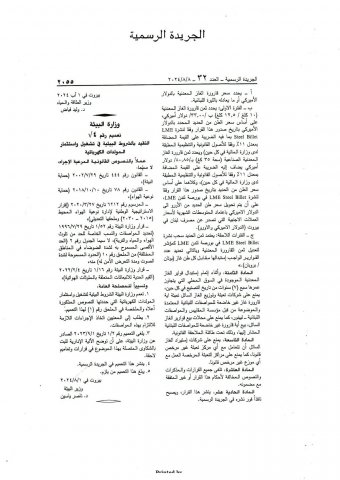
This circular, issued by the Ministry of Environmen,t is not being implemented across various Lebanese regions. The researchers behind AUB’s study, supported by a circular from Beirut Governor Marwan Abboud, tried to enforce their recommendations in order to reduce pollution. Judge Zouein played a central role in implementing the circular, relying on the State Security apparatus and technical support from the Beirut Municipality, which should suggest, and lead, to a successful campaign for change.
A closer look at the results recorded in Beirut’s District I, which includes several neighborhoods such as Medawar, Achrafieh, and Rmeil, shows that the Achrafieh office of the State Security apparatus worked to carry out the judicial mandate issued by Judge Zouein. The office issued warnings and conducted field inspections with the assistance of technicians from Beirut Municipality, and despite limited resources, has so far succeeded in installing more than 120 environmental filters and placed 70 generators under treatment. The office also succeeded in obliging generator owners who have branches outside its jurisdiction to install filters on their generators, as shown in the attached map.
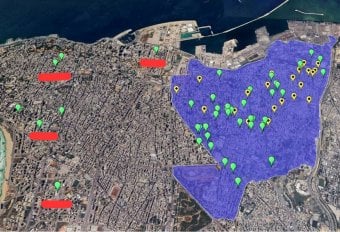
Map of generators shared by State Security with Raseef22. The green dots indicate generators that have been treated and processed, while the yellow ones indicate generators under treatment. A single dot may refer to more than one generator.
The circular’s success, however, did not extend to the rest of Beirut’s neighborhoods. Complaints in Hamra and Qraytem — two neighborhoods in the capital outside the jurisdiction of the State Security office in Beirut’s District I — did not receive effective responses from other State Security offices. According to MP Saliba, the offices with jurisdiction to follow up on complaints outside Beirut’s District I repeatedly resorted to excuses and delays under various pretexts without achieving tangible results in implementing the circular and obliging private generator owners and ishtirak providers to install filters and comply with environmental and safety conditions. Her argument was corroborated by Raseef22 with at least three security and judicial sources involved in the file.
In addition, she shared that some generator owners threatened to cut electricity to residents if they were forced to install filters. When asked about the reasons behind the inability of State Security offices in some neighborhoods, and whether this was linked to political and security protections, she replied: “All possibilities are open.”
Thus, between one office and another within the same agency, and between one neighborhood and another in the heart of the same city, generator owners have proven themselves stronger than the state as they continue to fail to comply with environmental specifications and public safety requirements, further exposing residents’ safety and health to various hazards.
The widespread failure to comply with the circular, and the authorities’ lack of effort to enforce it in parts of the capital, demonstrates the state’s weak accountability measures and the enforcement of laws, decisions, and regulations, and the emergence of groups that even municipal police — and sometimes security agencies — are unable to confront.
Prime Minister Salam set a deadline for generator owners of up to 45 days to regularize their situation and comply with the procedures, under penalty of the necessary legal measures against violators, including issuing violation reports, seizing and confiscating generators when necessary, and referring their owners to the competent judicial authorities.
Where generator owners, influential figures, and politicians meet
Since 2019, budget laws have stipulated that municipalities must conduct surveys of the number and capacity of generators within their jurisdictions and inform the Ministry of Finance to ensure fees can be imposed on generator owners, equivalent to 100,000 Lebanese pounds per kVA. It should be noted that generators operated by municipalities are exempt.
Under the Right to Access Information Law, we submitted a request to the Ministry of Finance in June 2025 for information on the extent to which municipalities have complied with these provisions, the number of generators that have been declared, the actual and expected revenues, and the measures taken against generator owners who failed to pay the relevant taxes, in addition to other information related to generator tax compliance and the value of the taxes derived from them.
Despite the law stipulating a 15-day deadline — extendable by another 15 days — for a response, the Ministry of Finance, after three months, had not provided us with the information, despite regular follow-ups and repeated reminders of the publication deadline.
According to the Ministries of Economy and Interior, they do not have a specific figure for the number of private ishtirak generators across Lebanese territory, an essential number needed to determine the scale of funds collected from this sector and the amount of lost revenues that could be recovered.
Former Economy Minister Raed Khoury, who launched a campaign against generator owners during his tenure to compel them to install meters, told Raseef22 that generator owners’ profits were “enormous,” and had allegedly reached nearly one billion dollars before his campaign, adding that even after the installation of meters, generator owners continued to make large profit margins.
The Ministry of Finance’s response would reveal how sound it is to rely on municipalities to provide accurate information to secure revenues from generator owners for the state treasury. Lebanon’s municipal experience suggests they are neither the most suitable framework nor the most effective authority to control the chaos of billing, extortion, public safety, and environmental standards in the generator sector. Nor are they the best source for data the state would use to impose taxes and fees based on generators’ capacity and profits.
Many facts strip municipalities of any claim to being a competent regulator. According to information we obtained from the Ministry of Economy, 1,208 violation reports were issued against generator operators between 2022 and the end of May 2025 for failing to comply with official pricing, not installing meters, tampering with meters, or failing to issue detailed invoices.
Notably, the Ministry of Economy’s General Directorate has also issued violation reports against municipalities or municipal committees that operate generators themselves. This suggests that some municipalities share with private operators a tendency to violate the law — or, at minimum, fail to enforce it.
Examples are numerous. The Ministry of Economy cited the municipality of Qoubaiyat in the north after its mayor set a separate tariff schedule for each generator in his jurisdiction. This was not an isolated case. Acting North Governor Iman al-Rafei sent letters to the district commissioner of Dinniyeh and to the municipalities of Tripoli and Zgharta, requesting that no mayor issue statements or circulars setting tariffs for private generators in contradiction of the official pricing. The letters followed violation reports against operators who defended themselves by saying mayors had set those unlawful rates, contrary to the pricing issued by the Ministry of Energy.
Under the Right to Access Information Law, we submitted a request to the Ministry of Finance in June 2025 for information on the extent to which municipalities have complied with these provisions, the number of generators that have been declared, the actual and expected revenues, and the measures taken against generator owners who failed to pay the relevant taxes
Some municipalities have also proven unable to confront generator owners’ outright extortion. In Tripoli, one of the country’s largest municipalities, the previous administration was powerless to enforce official pricing.
“If you want to punish a generator owner and seize the generator, the municipality would not have the capacity to operate it due to the lack of technicians and sufficient police personnel, which could lead to cutting electricity to 300 homes,” Former mayor Riyad Yamak told Raseef22.
He added that generator owners coordinate among themselves. When he attempted to compel them to respect official pricing and install meters, they responded with threats to hand over the generators for the municipality to operate.
Following the May 2025 municipal elections in Tripoli, the dismissal of the North governor, and the appointment of acting governor Iman al-Rafei, the municipality, governorate, State Security, and the financial judiciary moved to curb inflated generator pricing that violated official rates. Raseef22 obtained samples of violation reports issued against offenders, ranging from $1,500 to $6,000, depending on the number of subscribers served by each generator.
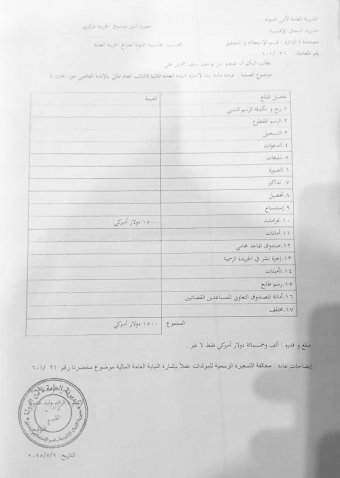
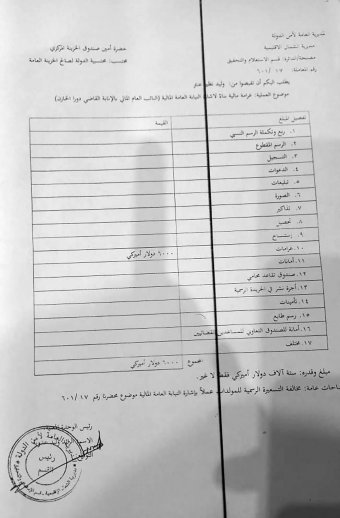
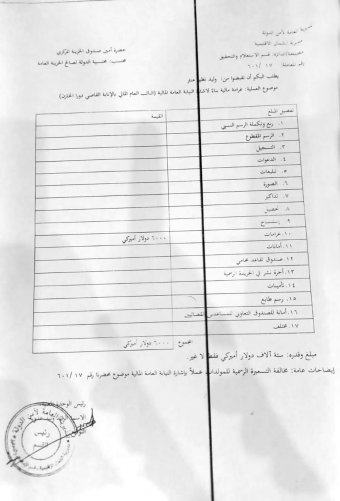
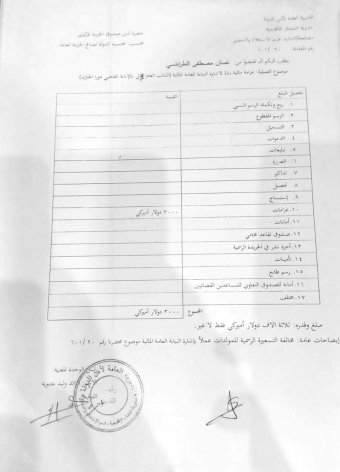
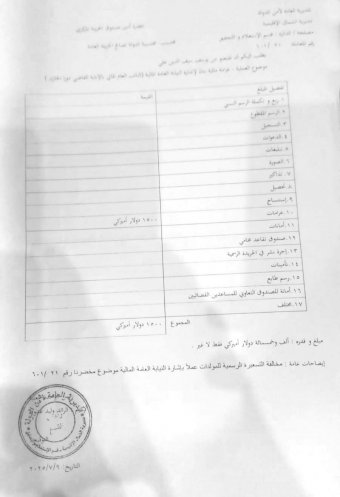
Violation reports issued against offenders who had violated the official pricing
Even the Beirut Municipality — the largest municipality in Lebanon — acknowledged in correspondence with the judiciary and the parliamentary Economy Committee that 90 generator owners were violating the Ministry of Economy’s decision, its official pricing, and a circular issued by the Beirut governor. The municipality ultimately filed a notice with the financial public prosecutor.
Yamak cites a generator installed in a roadside garden opposite an elderly care home in Tripoli as evidence of the protection enjoyed by generator owners and their ability to bypass laws and regulations. He says he sought to remove the violation and even secured a pledge from the generator owner’s political backers and beneficiaries. Still, he failed to have it removed. More than two months after he left office, the generator remains in the middle of the road.
Raseef22’s interview with former Tripoli mayor Riyad Yamak
Former economy minister Raed Khoury also points to political, municipal, and elite protection of generator owners. He describes some operators as part of a “mafia covered by influential people, municipalities, MPs, ministers, or governors — a network that benefits from the generators and from the absence of the state.” Khoury says MPs, municipalities, and political actors intervened on behalf of generator owners, but he refused their pressure and threatened to expose them if it continued.
He adds that close ties often bind municipalities and generator owners: the owner may be the mayor himself, or there may be profit-sharing arrangements, free electricity, or free use of municipal land based on mutual interests. He also notes that some governors failed to cooperate. For example, he says he received no meaningful support from the former North governor in efforts to rein in chaos in the generator sector.
Raseef22’s interview with former economy minister Raed Khoury
Is time on our side?
In parallel with our investigation, Prime Minister Nawaf Salam, asked ministries and public administrations to take immediate legal measures to ensure that all private generator owners comply with the applicable laws, decisions, and circulars in force. The request included adhering to pricings issued by the Ministry of Energy and Water, installing electronic meters and filters that meet the required specifications, submitting declarations, and complying with environmental conditions.
Necessary recommendations to address corruption in the private generator ishtirak issue, as proposed by former minister Raed Khoury
Prime Minister Salam set a deadline for generator owners of up to 45 days to regularize their situation and comply with the procedures, under penalty of the necessary legal measures against violators, including issuing violation reports, seizing and confiscating generators when necessary, and referring their owners to the competent judicial authorities.
Even the Beirut Municipality — the largest municipality in Lebanon — acknowledged in correspondence with the judiciary and the parliamentary Economy Committee that 90 generator owners were violating the Ministry of Economy’s decision, its official pricing, and a circular issued by the Beirut governor.
The government decision itself, in light of all the information and facts presented and gathered by Raseef22, raises various questions about the ability of agencies, administrations, and municipalities to compel generator owners to comply with environmental standards, laws, and the official pricing. These are the same administrations, institutions, agencies, and municipalities that have largely failed, for several years, to enforce standards, laws, and regulations.
The question then remains: will old tools dismantle the ishtirak mafia and finally hold perpetrators accountable? And will they seize non-compliant ishtirak generators and operate them? The coming days will reveal the answer.
* This investigation was produced with the support of Civil Rights Defenders (CRD)
Raseef22 is a not for profit entity. Our focus is on quality journalism. Every contribution to the NasRaseef membership goes directly towards journalism production. We stand independent, not accepting corporate sponsorships, sponsored content or political funding.
Support our mission to keep Raseef22 available to all readers by clicking here!
Interested in writing with us? Check our pitch process here!