In light of recent developments in large-language models, art has been under an unprecedented threat of automation, scrubbing away the essential humanity of audiovisual forms humans have used to express themselves for centuries. Human-crafted stop-motion animation, in particular, hasn’t been pursued in mainstream cinema as much as other forms of three-dimensional animation. Simply put, animation in this form is an arduous, time-consuming, and expensive process that can exhaust even major Hollywood studios’ resources.
This is why it comes as a surprise that, despite the odds, a small Lebanese team successfully produced a highly acclaimed stop-motion animated short film, aptly titled All This Death, right here in the Middle East. Simply put, it’s a miracle considering the geopolitical and socioeconomic turmoil that Arabs have been subjected to over the past five years.
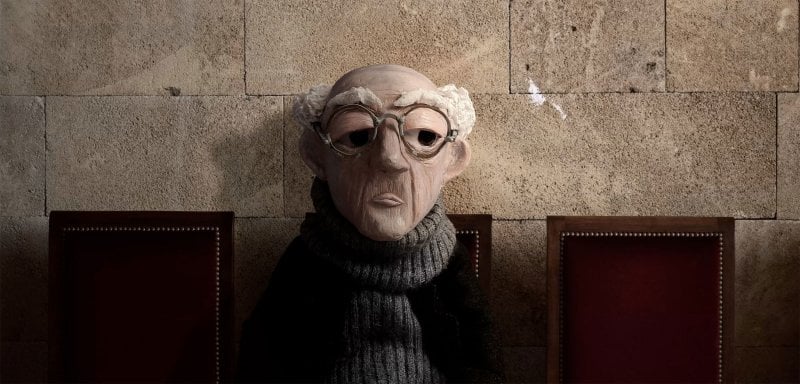
Released in 2025, All This Death, directed by Lebanese animator Fady Syriani, follows a Beirut resident with a peculiar fixation on the local obituaries page in the newspaper. Attending these funerals makes up his “mourning” rituals. Viewers watch uneasily as the character undergoes a surreal journey of grieving and, eventually, acceptance to process the loss of not only his beloved, but also his city and home. It’s recommended viewing for others in Lebanon reeling from the same losses that the protagonist is experiencing, and, on rewatches, it will help viewers process the utter tragedy the country has been experiencing for years now in a way that few other films on the subject have been able to.
The film presents a fascinating experience that hauntingly recreates Beirut’s decaying landscape in the 2020s in the wake of the economic crisis and the capital’s port explosion. Its protagonist, like the elders in this city, was among the primary victims of the country’s recent successive crises, having had his life savings stolen from him or, in some cases, having been left without appropriate shelter. Despite its animated form, it is one of the most accurate depictions of the city. Syriani’s work captures its tragic decline better than any other film about the country’s steep decline in the past five years. It’s no wonder, then, that its lengthy festival run was met with widespread critical acclaim. It even garnered Best Director, Best Film, and Best Sound at the Festival du Film Libanais, as well as the Audience Choice Award at Beirut Shorts and Best Narrative at the Fujifilm Short Film Festival in Dubai.
We’re creating films and visual art that meet the standards we aspire to, while addressing subjects and telling stories that exist outside the hegemony of market-driven cinema, its funding constraints, and prevailing trends.
Perhaps what is most impressive about Syriani’s debut is the world-class production value that rivals the best the American film industry has to offer. I immediately reached out to Syriani so I could get to know the filmmaker who successfully carved out a path for Lebanese animation at a time when it feels like the local film scene is slowly fading away.
Syriani, like his art, did not disappoint.
Raseef22 spoke with the filmmaker about his unique background and inspirations, the turbulent production behind All This Death, and the current state of independent filmmaking in the region. This interview was conducted over an email exchange in January to accommodate Mr. Syriani’s schedule on the festival circuit and was slightly edited for clarity and style.
Tell us about yourself.
I’m a Lebanese animator, writer, and director with a background in architecture and fine arts. I came to filmmaking through visual arts because I was drawn to animation as a cinematic language capable of exploring complex emotional, social, and political themes.
Through handcrafted animation, my work examines memory and loss as personal experiences shaped by broader political realities. My latest short animated film, All This Death, premiered at the Annecy International Animation Film Festival and has screened and won awards internationally.
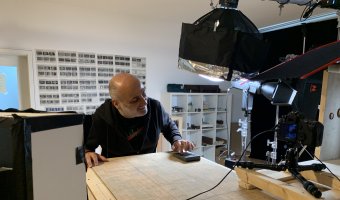
Fadi Syriani at the film’s studio. (Photo courtesy of Fadi Syrian).
Alongside my directing work, I am deeply engaged in mentoring and education, seeing transmission and collaboration as an extension of my filmmaking practice. As a co-founder and member of the Cooperative of Cinema Professions in Beirut, I am actively working with fellow filmmakers from all disciplines to create and promote an alternative model for independent cinema in a constantly challenging filmmaking landscape.
Together, we’re creating films and visual art that meet the standards we aspire to while addressing subjects and telling stories that exist outside the hegemony of market-driven cinema, its funding constraints, and prevailing trends.
And what inspired you to become a filmmaker?
I was drawn to filmmaking gradually. Growing up in Beirut during years of uncertainty inevitably shaped my outlook, but I’m more interested in how that experience influences my perspective than in addressing it directly.
Animation, in particular, offers the precision and freedom to explore complex ideas without relying on realism or explanation.
Filmmaking allows me to examine situations, behaviors, and contradictions with a certain distance. Animation, in particular, offers the precision and freedom to explore complex ideas without relying on realism or explanation. My background in architecture trained me to think in terms of structure, space, process, long-term development, and rhythm, and animation became a way to apply that thinking to storytelling.
What inspired All This Death?
The development of the film, and its writing (and rewriting), required several extensive readings that revolved around the same topics and tackled similar human behavior in times of war, loss, and grief, including writings by Simone de Beauvoir, Vladimir Jankélévitch, Karl Ove Knausgård, Khaled Khalifa, and Kafka, to name a few.
The main character, in particular, is inspired by an elderly neighbor who lived in the same building where the film was shot. He was a constant presence at social gatherings, funerals, weddings, receptions, and openings, one of the few remaining awkward figures in a city marked by ongoing decay and turmoil.
The visual and narrative style may reflect elements reminiscent of Roy Andersson’s world, Michael Haneke’s Amour, and several animated short films, such as Emma de Swaef and Marc James Roels’s Oh Willy... or even Adam Elliot’s Mary and Max. While researching, we also came across Alain Resnais’s Hiroshima mon amour and Hirokazu Kore-eda’s After Life, among others.
And what exactly were you trying to convey through this film?
It’s a political reckoning shaped by decades of lived experience under sustained violence. It emerges from the turmoil I witnessed between 1976 and my departure in 2004, and from my return in 2018 after 14 years abroad. Returning home meant confronting death that is neither natural nor accidental, but rather sudden and ongoing. A death imposed by state corruption, internal conflict, and colonial capitalism that converged with Zionist settler-colonial ambitions, destruction, and displacement.
Returning home meant confronting death that is neither natural nor accidental, but rather sudden and ongoing.
All This Death is about the forced loss of so many lives in the last few years, and an attempt to grieve.
Lebanese animation isn’t all that common, and stop-motion animation even less so, especially when compared to 3D CGI or hand-drawn 2D art.
Why did you choose stop-motion animation to tell this kind of story?
We chose stop-motion and puppet animation for their tangible, physical nature, which reflects the story’s emotional weight and fragility. The handmade process embraces imperfection, allowing silences, pauses, and subtle gestures to feel intimate and human.
By maintaining a slight distance from realism, the medium offers a sensitive way to engage with heavy themes while preserving their emotional resonance. Building the protagonist’s world through textures, colors, and tactile details also shaped the film’s sound design, where even the smallest movements and quietest actions became expressive and meaningful.
Stop-motion animation is usually a very costly process, given how time-consuming and arduous the production process tends to be.
Lebanon is still reeling from the aftershocks of the past five years. In the hope of guiding other budding filmmakers in the region, how did you fund this short film?
All This Death was backed by strong international support, having received major production and development funding from leading institutions. We were awarded grants from the Netflix Equity Fund, the AFAC Production Grant for Cinema, the Francophonie Cinema Fund, and the DFI Spring Cinema Grant, as well as three regional funds in Germany. It also received multiple awards at the Animarkt Stop Motion Forum in Łódź, reflecting early industry recognition and sustained confidence in the film’s creative and production vision.
How long did the production period last, and what hurdles did you experience along the way?
The actual production of the film lasted around 9 to 12 months, including animation and shooting in Leipzig, Erfurt, and Düsseldorf for more than 100 days, followed by an extensive post-production stage including sound design, compositing, and VFX. We produced additional animation in Beirut for three to four months between December 2024 and June 2025, in time for the world premiere at the Annecy International Film Festival and the Sony Future Filmmaker Award Programme at Sony Pictures in Los Angeles.
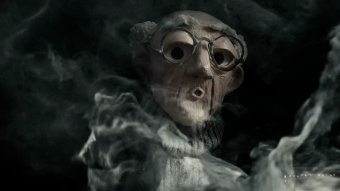
A still of the All This Death’s protagonist. (Photo courtesy of Fadi Syrian).
The production was interrupted on several occasions by the genocide in Gaza and the subsequent war in Lebanon in 2024. Although the team and I had doubts on several occasions about the futility of our endeavor in times of unrest in our region, we were driven by passion, commitment, and the urgency to tell our stories in response to constant efforts to erase our history, present, and possible future.
Do you think there are ways to improve regional funding and production for Arab film projects?
There is always room for improvement in regional funding, especially when it comes to special genres or media such as animated shorts or feature films, although we have seen an increase in funding opportunities in the region despite the turmoil.
How has the film been received on the festival circuit?
All This Death has received wide festival recognition so far, following its world premiere at the Annecy International Film Festival. The film went on to screen at prominent international festivals, including Guanajuato (Mexico), Fantoche (Switzerland), Animage (Brazil), Festival du Film Libanais (France), Beirut Shorts International Film Festival (Lebanon), Passaggi d’Autore (Italy), and the Doha Film Festival (Qatar), among others.
This reorientation of narrative, coupled with technological advances, opens the possibility for the emergence of a new generation of filmmakers—one better equipped to confront and articulate the current state of the world.
The first six months of its festival run were marked by strong acclaim, earning Best Director, Best Film, and Best Sound at the Festival du Film Libanais, the Audience Choice Award at Beirut Shorts, and Best Narrative at the Fujifilm Short Film Festival in Dubai. The festival run is still ongoing, and the next stops include Animatex in Cairo, Kaboom in Amsterdam, and the prestigious International Trickfilm Festival in Stuttgart, for its German premiere.
Looking ahead, are you currently working on any major creative projects you can discuss with us?
I am currently developing a script for a short animated film that unfolds within a climate of paranoia and political unrest. The project seeks to explore new visual strategies through a hybrid of live action and rotoscoping [which is the animation technique where live-action footage is traced over by animators to produce animated scenes]. I approach animation not as a fixed technique, but as a malleable medium—one that reacts to the psychological and political tensions of the narrative, and becomes an active vehicle for expressing its themes.
Finally, what do you see for the future of cinema in the region?
In the last few years, I’ve witnessed the emergence of new markets, especially in the Gulf, as well as new funding opportunities and alternative means of production.
Political shifts in the region, alongside growing global awareness, have given rise to a new wave of films and narratives that expose decades of genocide and the exploitation of land and people in the service of the political and economic agendas of global powers. This reorientation of narrative, coupled with technological advances, opens the possibility for the emergence of a new generation of filmmakers—one better equipped to confront and articulate the current state of the world.
Final words for aspiring filmmakers in the region?
I have no specific advice to offer, only a slight adaptation of a well-known quote by Pina Bausch:
“Read, read, otherwise, we are lost.”
Raseef22 is a not for profit entity. Our focus is on quality journalism. Every contribution to the NasRaseef membership goes directly towards journalism production. We stand independent, not accepting corporate sponsorships, sponsored content or political funding.
Support our mission to keep Raseef22 available to all readers by clicking here!
Interested in writing with us? Check our pitch process here!