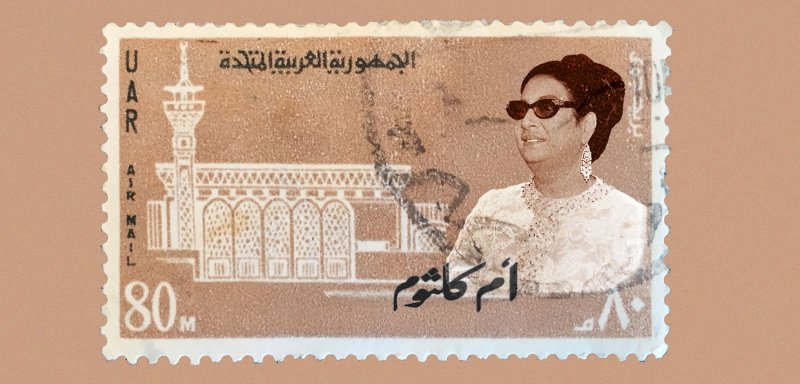
“El Sett,” the first major film production chronicling the life of the internationally renowned Umm Kulthum, was released in late 2025 to wide acclaim.
Directed by Marwan Hamed and starring Mona Zaki as the Egyptian musical icon, the film attempts to honor an incomparable legend with the financial backing of two state-aligned entities: Egypt and Saudi Arabia. In the process, it invites viewers into its meticulously constructed world with the intoxicating visuals of a bygone era. Nonetheless, upon my second viewing, the film is noticeably lacking in substance and egregiously misrepresents an unforgettable woman whose voice still echoes throughout the Arab world.
The anticipated biopic begins with Umm Kulthum preparing to perform at the Olympia in Paris for the historic concert that cemented her status as a global icon. This event is presented without adequate sociopolitical context for viewers to understand why she was there and what the event meant to her: Umm Kulthum held this concert as one of many to raise funds for the Egyptian war effort after its losses to the Israeli army during the Six-Day War in 1967. To fans familiar with Umm Kulthum, her inextricable link to the sociopolitical climate that shaped her and that she, in turn, shaped can neither be denied nor ignored. Above all, these details were inseparable from her public persona and her cultural influence within Egypt and the wider Arab world.
The lack of sociopolitical context appears to be an attempt by the filmmakers to avoid controversy. Of course, currently, the pan-Arab socialist ideologies she championed are a polarizing topic to engage with, which could isolate potential viewers. Still, it’s hard to view this as financially motivated—El Sett’s budget, estimated at around eight million dollars, means it is unlikely for the film to recoup its costs, since Egyptian films have rarely grossed higher than that, even when factoring in the international box office.
It would be easy to chalk up the filmmakers’ hesitancy to engage with her political beliefs as a choice to center Umm Kulthum’s life, but casting Zaki in the lead after the backlash she received for starring in the Arab remake of Perfect Strangers indicates otherwise. It’s neoliberal conservative lip service: a transparent tactic to try to reinforce the filmmakers’ shallow attempt at a feminist project.
The film is a co-production between two state-aligned entities. The first is Synergy Films, a film production company founded by Tamer Morsi. Morsi is an Egyptian media mogul who currently chairs Egyptian Media Group, which is owned by Eagle Capital, an entity governed by the General Intelligence under Abdel Fattah El-Sisi, thereby operating with the backing of the current Egyptian regime. The second is Big Time Studios, a film and TV studio owned by Saudi General Entertainment Authority chairman Turki Al-Sheikh. Naturally, this partnership raises issues about the intentions of the producers and the kind of sway they held over the final cut.
Without further insight into what went on behind the scenes in the making of a film about one of the Arab world’s most revered singers, nothing can be concluded definitively. But, by downplaying Umm Kulthum as a radical sociopolitical figure, viewers end up with a flattened portrayal that eludes the centrality of her alliance with Gamal Abdel Nasser to her legacy and longevity. Like it or not, Umm Kulthum’s voice is tied to Egypt’s turbulent history as it transitioned away from a traditionalist monarchy. She rose to the status of a national icon in modern Egypt because her work after the revolution championed Abdel Nasser and his pan-Arabist cause.
This ham-fisted approach tries to appeal to younger generations a decade after pop feminism has fallen out of favor.
It is misleading, then, that the film features a scene of an alienated Umm Kulthum after the ascension of the Free Officers Movement. According to the film, since she had sung praises to the royal family, viewers are told she was banned by the new radical regime from playing on public radio and is therefore no longer permitted to perform on the Egyptian stage. We watch a sequence of her wandering around her home in heartrending loneliness for an entire year before Nasser orders a concert to benefit his public image. The most heartrending aspect of this whole scene is that none of this happened. The radio ban lasted around a week, and Nasser had nothing to do with it. In fact, he ended it as soon as he was informed of it.
Beyond historical tampering, the filmmakers reinterpret an icon’s fascinating life as one long transformation into a Western-approved, Hollywood-style Girl Boss. Unfortunately, El Sett has all the hallmarks of these stories, presenting a complex figure like Umm Kulthum as a pseudo-feminist bully in the form of a “strong female lead,” who is as ruthless as the sexist men who surround her. We watch as she rejects love for success, delivers speeches about succeeding despite being a woman, and checks off her list of firsts as a woman in a male-dominated field. Even if historically accurate, this ham-fisted approach tries to appeal to younger generations a decade after pop feminism has fallen out of favor. It brings to mind the oft-derided pseudo-feminist empowerment narratives of the American film industry in recent years, like Charlie’s Angels (2019), Mulan (2020), and Wonder Woman 1984 (2020), which tried to pull off a similar arc to inspire women—all of which failed spectacularly.
The film unsuccessfully attempts to represent a progressive wave in the Middle East while, in reality, co-opting the story of an Arab icon for subtle sociopolitical propaganda that viewers won’t even realize they’re being subjected to.
In an opinion piece recently published by Arab News, Dr. Dania Koleilat Khatib, an executive director at a UAE-based independent think tank, suggested that El Sett could be seen as some sort of “counter-narrative” to Western-centric media. The film could somehow pull this off by offering a positive image of Arab culture, which can act as a form of “soft power.” It’s easy to understand how this could work if you take the film at face value: its depoliticization of Umm Kulthum, in a way that favors conservative and neoliberal politics, coupled with its attempt to paint the icon in the shallow tones of pseudo-feminist narrative techniques, certainly appeals to Western audiences, especially left-leaning youth interested in learning more about our culture.
But this is what makes El Sett so problematic. The film unsuccessfully attempts to represent a progressive wave in the Middle East while, in reality, co-opting the story of an Arab icon for subtle sociopolitical propaganda that viewers won’t even realize they’re being subjected to. What’s worse is that they won’t have learned anything of value about Umm Kulthum from a film purportedly about the life of a legend who has offered us so much and received so little in return from us. Unfortunately, she’ll continue to receive that same treatment from us if we allow similar propaganda to be the definitive word on her legacy.
Raseef22 is a not for profit entity. Our focus is on quality journalism. Every contribution to the NasRaseef membership goes directly towards journalism production. We stand independent, not accepting corporate sponsorships, sponsored content or political funding.
Support our mission to keep Raseef22 available to all readers by clicking here!
Interested in writing with us? Check our pitch process here!